

Sensory clothing for adults is a type of product line that, in theory, should be easy enough to find – but never seems to be. There have been great advances in the development of sensory clothing products in the last decade or so, but the development of the product has focused largely on children. School uniforms for autistic children. Sensory essentials for toddlers with SPD. Clothes without labels for kids who have trouble dressing in the mornings. But the equivalent for adults has been years behind, leaving a huge consumer base – adults with autism, ADHD, sensory processing disorder, and similar conditions – shopping from the children’s range, altering regular clothes, or living with uncomfortable clothes because there aren’t any better options available.
This problem exists, is documented, and is a source of frustration for those who deal with it. It is being addressed – gradually, inconsistently, and still not quite quickly enough. That’s why this article was written, for adults seeking sensory clothing.
There are several factors behind why the children’s sensory friendly clothing market started earlier and progressed faster. For one thing, buyers are the parents, and parents investigate the matter thoroughly. For another, the age of schoolchildren brings about the problem that can no longer be ignored – wearing the clothes and uniforms for school becomes a real challenge for kids of this age group. While an eight-year-old unable to wear his or her school uniform is an everyday crisis for the child’s parents, an adult unable to cope with his or her workwear goes unnoticed.
Autism in adults used to be considered rare, and thus was not the subject of much attention for many years. Adults with ADHD came under scrutiny even later, and people with sensory processing disorder even later than those. This means that there was no recognition that the sensory clothes could become a commercial category on their own until just a few years ago.
As a consequence, the buyer of adult sensory clothes faces some specific challenges:
The above issues are not necessarily going to be permanent. But it is important to understand them to navigate the current market properly.
While children require sensory clothing mostly for school, adults require it in all settings of their lives, and the standards in those settings are even stricter compared to the requirements of school uniform policies.
This is the greatest void in the market for sensory clothing in adults. There are many garments in a traditional professional dress code – whether it is formal, business casual, or smart casual – that many sensory-sensitive people find impossible to wear: stiff collars, woven clothes, tight and form-fitting designs with narrow sleeves, belts with buttons or hooks, and fabric chosen for its look rather than tactile properties. The sensory load associated with wearing an improperly dressed garment for a whole day while being engaged in the professional environment requires a lot of effort from a person with ADHD or autism.
The requirement for sensory clothing in professional settings can be summarized into two: elimination of sensory triggers and meeting professional environment standards in terms of appearance. Exactly this combination is the last thing the market has been failing to deliver.
There are a variety of social settings in which adults find themselves, and in which they need to meet the appearance requirements: dates, family events, social events, traveling, leisure activities, going out, etc. Traditional solutions for sensory clothing are often limited to plain basic designs in neutral colors. This means that those people who cope with sensory overload by dressing in only soft, grey pullovers do not have all of their needs met – they sacrifice half of their wardrobe for the other half.
The adult wears clothing over an extended stretch of the day, whereas the child changes their clothes post-school. The child can get out of school clothes after returning home from school, but an adult has to wear one set of clothes from 7 am till 9 pm, depending on their schedule of work, traveling, and socializing. The sensory aspects of a clothing item increase with time; the elasticity, which might have been comfortable at 7 am, becomes a cause of pain by 9 pm, and the seam, which is noticeable at 9 am, becomes a distraction by 3 pm. All-day wearing sensory clothing requires careful design.
A wedding, funeral, job interview, or formal dinner party—these events require dressing up according to a certain code, which is where the adult sensory wear market faces a severe challenge, because there have been almost no good sensory wear options available for the adult in a formal setup. Formal wear items are made completely irrespective of any sensory issues, like structured lining in a blazer, uncomfortable fabric, tight collars, rough lace in a dress, boning in women’s wear, and heat-trapping formal fabric.
The construction requirements for adult sensory clothing are no different from sensory clothing in general, but the adult requirement includes specific needs in proportion, style, and durability, which children’s clothing is not expected to provide.
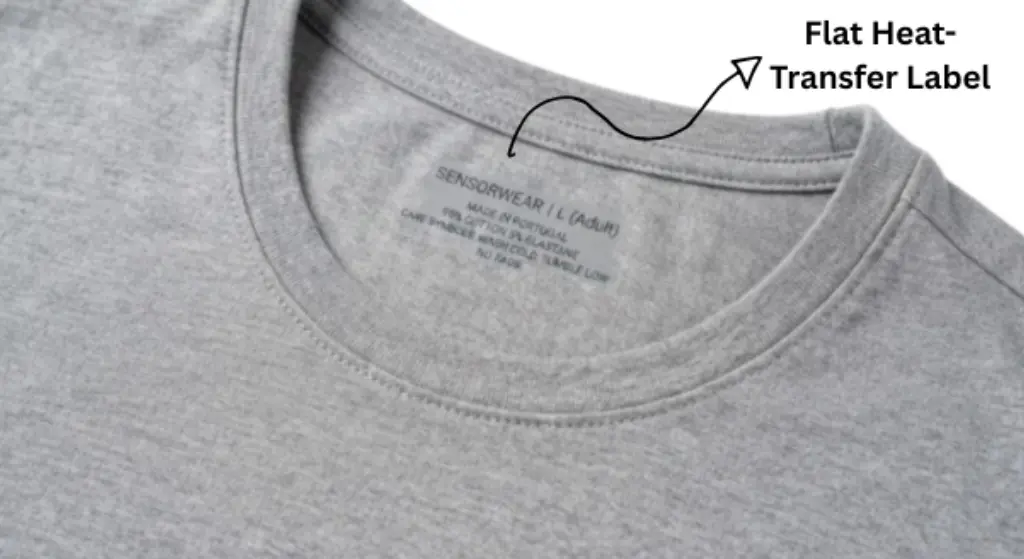
A true tagless design for adult sensory clothing must be more than simply the removal of a tag and the use of a heat transfer label. The heat transfer label must itself be completely flat and smooth – a heat transfer label that is raised or peels off at the inner neckline of the clothing item designed for ten-hour wear by an adult is not acceptable. The information about how to wash should be woven into the fabric and not have any tactile presence. Companies claiming their clothes to be tagless must be asked to confirm that the heat transfer label does not have any ridges and lies flat against the fabric surface.
Overlocked seams, which are standard in construction for most clothing items, produce a ridge at each point at which two fabric panels are joined. As adult sensory clothing is intended for wearing throughout the day, each of the locations of seams is a potential source of sustained pressure for ten hours: shoulder seam, underarm seam, side seam, waist seam, and sleeve seam. Flat lock seaming takes away the ridge at each of these places. Bonded seam construction does away with the seam structure altogether at some joining points of panels. Adult clothing items that have overlocked seams are not considered sensory clothes even if they are sold that way.
Adult sensory clothing fabric must not only be soft to touch initially, but it should also be able to sustain its feel through a ten-hour period of wear and should not get stiff, pill, or retain heat, which could cause additional sensory stress as the body temperature increases during the day. Cotton fine gauge jersey is the most reliable fabric for adult sensory clothing as it is soft, breathable, uniform in feel across temperature variation, and is durable enough with regular washing. Bamboo jersey provides similar performance with the added benefit of a moisture-wicking nature. Merino wool is suitable for those adults who can wear wool, owing to the fine fiber size.
Synthetic fibers are more varied. Some finely woven combinations of polyester and modal work well; others retain heat or become statically charged, which introduces another sense. Material composition and knit style must be noted, rather than guessed based on product description. OEKO-TEX Standard 100 certification would be a good quality indicator for materials used in all-day body-contact clothing.
Too-tight elastic is one of the most common sensory problems in adult clothing. It is a simple and universal test: if elastic on the waist, cuffs, or socks marks the skin, it is too tight for long-term sensory use. Good sensory clothing uses wider and softer elastic, covering more contact area, lower-compression elastic, or non-elastic waistband styles. Fold-over waistbands, drawstring casing without any metal parts, and stretch material with no elastic are also good options.
This is the element that makes the difference between sensory clothing for adults and sensory clothing for children in adult sizes. Construction may be the same, but the styling and fit must be right for the adult professional and social life. A sensory-friendly top for work should look like a worktop. Sensory-friendly clothing for social events should look like it belongs at that event. Engineering of construction is the same; the design idea is different. Adults do not need sensory-friendly clothing compromising their professional and social image.
Adult Sensory Clothing Construction Checklist
| Requirement | Adult-Specific Standard | How to Verify |
| Tagless label | Heat-transfer label fully flush — no raised edge or peel after washing | Ask for wash-cycle durability data on label adhesion; request pre-purchase sample |
| Seam construction | Flat-locked or bonded seams at all join points — no overlocked ridge anywhere | Check inner garment surface at shoulder, side, underarm, and waist before ordering |
| Fabric all-day feel | Maintains softness and breathability across 8-10 hour continuous wear | Request fiber content and knit structure spec; prefer OEKO-TEX certified fabric |
| Elastic pressure | No visible skin indentation after normal adult wear duration | Wear test for a full day before committing to volume; request elastic compression spec |
| Professional styling | Looks appropriate in adult work or social context — not children’s proportions | Request images of garment on adult model in professional or social setting |
| Wash durability | Maintains construction and feel across repeated home or commercial laundering | Request wash-cycle rating for seams, label adhesion, and fabric hand |
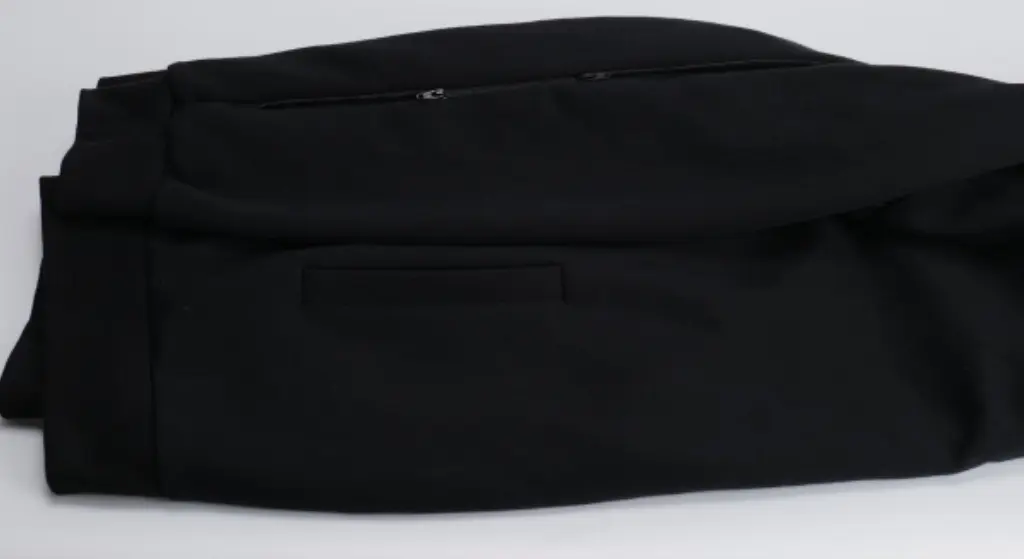
In discussing sensory clothing, there has long been an assumption that style comes second, something nice if present, tolerable to give up in favor of correct construction. It’s okay for children, since the school clothing of a kid is assessed mainly for comfort, while it’s chosen by the parents. For grown-ups, the compromise is not possible, and people buy clothes on their own.
A person with autism working in a professional setting can hardly get away with wearing a simple grey kid-sized sweater to feel comfortable. A person with ADHD participating in a social event won’t be able to accept looking like they dress solely according to their sensory needs. Self-presentation is essential for any adult in all areas of their life, not for vanity’s sake but because it’s necessary to be perceived as an adult and have proper respect.
Quality sensory clothing for adults is going to take this into account by making styling a construction priority. The process of creating garments without tags and with flat seams and comfortable fabric applies to the garments made in line with contemporary adult fashion. That’s where there is much room left for adult sensory clothing manufacturers to improve and gain a market advantage over competitors.
The adult sensory clothing industry comprises genuine specialists, general brands with sensory lines of variable quality, and brands that use sensory terminology but have no specific construction differences from non-sensory products. Knowing how to differentiate among these is key to saving time and money and avoiding making the same mistake again.
The needs of individual adult customers and business buyers – brands developing adult sensory lines, disability-focused retailers seeking sensory clothes for adults, health care and therapy facilities sourcing for their clients – may vary; however, one thing unites them – the adult sensory clothing availability issue. It is unpredictable, hard to check, and not necessarily designed for adults.
For business buyers designing adult sensory programs in bulk volumes, the demands go further than simply selecting individual garments. Consistency of production batches is extremely important – the people wearing sensory garments will detect differences in fabric feel, label texture, seam quality that are not visible to other people. The vendor that can produce batches of garments with consistent tolerance, provide documentation about fabric, seam type, and elastic, and ensure adult-appropriate garment design will not be an ordinary vendor for you – he or she will be a special one.
AdaptiveGarment.com produces adult sensory garments with construction specification ability: OEKO-TEX fabric options, flat-lock and bonded seams, flush heat-transfer labels, low-compression elastics, and adult-specific design for professional, casual, and active garments. OEM production starts from 100 units per style with customization of fabric, construction type, sizing, labeling, and packaging. For those who have the need for both adaptive and sensory garments among their adult population, combined production is also possible.
Get a free quote in 10 minutes – WhatsApp us at +8617702035343 or visit adaptivegarment.com/contact
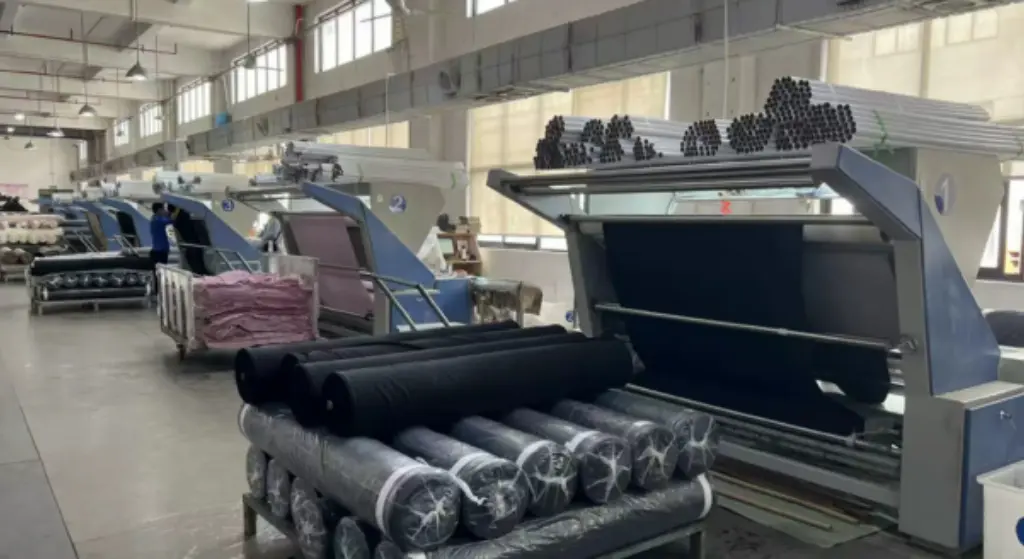
There was a strong market need for sensory clothing for children first, due to the buyers being parents and the child’s sensory issues being clear and pressing. While adults have the same kinds of needs, the recognition of their needs happens somewhat later. The system missed out on adults with autism. The mainstreaming of adults with ADHD diagnoses happened recently. There is still an ongoing effort to recognize the sensory processing disorders in adults. Thus, while the market gap is closing slowly, the sensory clothes for adults still lag behind those for children in development by several years.
In some cases, yes, and in part. There are brands such as Uniqlo and Hanes that offer their own lines of basics that come in a tagless form. This removes one of the major irritations that comes with wearing clothing. However, it does not make these garments sensory clothes since there is a lot of construction features that affect the sensory experience of wearing a garment. A tagless t-shirt from a mainstream manufacturer with overlocked seams, tight cuffs and synthetic fiber mix is less irritating than one with a tag, but it still is not sensory clothes. It meets one criterion, fails another.
Natural fiber dominant fabrics are generally the best choice for adult sensory clothes: fine gauge cotton jersey, bamboo jersey and merino wool. These fabrics do not change their properties throughout the whole wearing process, breathe and wash well. Among synthetics, modal blends might also be considered for use if the knit structure is fine and the fabric allows good air flow. Fabrics based on polyester fibers are the least predictable and most likely to create heat buildup within the garment. Fiber content and knitting structure should always be requested from the supplier.
No, they don’t need to, nor should they. Adult sensory clothing will be no different in appearance from contemporary clothing because all the engineering in it will be in the garment’s construction, not its exterior. Adult sensory clothing, which is easily identified as such from the outside, fails in its design. Seams will be flat on the inside. Heat transfer labels will be located inside the neckline. Low-pressure elastic will look just like ordinary elastic. Soft material will look like material. Engineering will be invisible, while appearance will be modern.
Yes, it is possible. Manufacturers who work exclusively with adult sensory clothing rather than enlarging children’s sensory clothing will produce adult sensory clothing in wholesale volumes, completely customized in terms of fiber, seam construction, labeling method, elastic choice, sizing, and styling. Typically, the minimum order quantity will be 100 pieces per style. For programs that want to create an adult sensory program, OEM manufacturers allow for complete control over the brand and adult-suitable designs without the cost of creating proprietary technical patterns. Adaptive dressing combined with sensory engineering is also available in combination.
The majority of adults who experience sensory issues with clothes will have been adapting their clothes for a very long time, removing tags, wearing garments inside-out to avoid seam lines, and wearing several sizes larger to prevent waistband pressure. While these adaptations work for part of the problem, they are far from being a garment that was created with sensory processing problems in mind. It begins with figuring out which exact triggers you were accommodating with these changes and then using them as criteria for assessing purposefully constructed sensory clothes. Start with one or two items of everyday wear, and not with a wholesale replacement of your wardrobe. Test it throughout a full day before purchasing the entire line because while the garment might be fine during the first hour, you could find some issues with it after the sixth or seventh hour.
It is the least served market of all sensory clothing, but one where the need is the largest. Professional and formal sensory clothes require the solution of two different problems at once – sensory-safe construction of the garment itself and a professional appearance. However, the options are available – flat knit pullovers in neutral colors that will fit into the category of smart casual, pull-on pants with a soft waistband looking like tailored pants, dresses in bamboo jersey that flow just like regular fabric, and do not feel synthetic. The market is still catching up, but there are options. If you are shopping for a professional sensory garment, ask about fiber composition, seam construction, and how the clothes photograph on an adult model in a professional setting – the latter one will tell you straight away if the clothes are designed for grown-ups or scaled-up kids’ clothes.
The washability of sensory clothing is one aspect that is unique to the category. It is precisely the aspects that make sensory clothes different from conventional clothing that may cause wear with poor laundering practices or lack of quality construction practices. The heat transfer labels may lift along the edges if regularly washed in hot water. The flat locked seams may pucker while being washed on an aggressive washing cycle. In every piece of clothing, elastic tends to lose its compression rating, but more quickly when exposed to high heat conditions during washing and drying. Wash the clothes either cold or on a gentle warm wash cycle, turning them inside out to keep the seams protected. Air dry or tumble dry on low heat settings. In case you are buying B2B, always ask the manufacturer for the wash cycle rating for the labels and seams.
