

Adaptive clothing for women is not an isolated niche product meant for the few. The World Health Organization says that over 1.3 billion individuals around the world have some disability, and a considerable percentage of those numbers consist of women. Including seniors with arthritis or weakened grip, patients recovering from surgeries, and women with neurological disorders and illnesses, we can see that the market for women’s adaptive clothes is far bigger than many think — and has long been unmet.
Ordinary fashion has always been designed for the able-bodied population: individuals capable of lifting their hands above their heads, maneuvering small buttons with both hands, and standing to put on trousers. For disabled women, those who suffer from an injury or illness, and elderly women, getting dressed is a hurdle they face daily.
This paper gives an account of what adaptive clothing for women really means, what makes a piece of clothing actually adaptive as opposed to being branded as such, and how one can choose truly adaptive clothing, whether it is for oneself, for use at an institution, or for the development of an adaptive clothing line.
The term tends to be used vaguely, so clarification is in order. Adaptive clothing is created to overcome one of the challenges of dressing, not just to appear comfortable. Every adaptive element is there because someone recognized a problem and solved it.
This becomes important when determining whether your garment is adaptive. A loose-fitting top is comfortable. A back-opening top with hidden snap closures that enables the caregiver to button it without the user having to raise her arms is adaptive. It all comes down to what goes into its design.
There are generally two types of adaptive clothing for women, which overlap:
Many adaptive items work in both ways. For instance, a top with side-seam snaps will allow you to get dressed independently if you feel like doing so and will make the process easier for your caregiver otherwise.
The first idea that comes to mind when we talk about adaptive clothes is elderly women in nursing homes. This is correct, but there are many more people who need such clothes.
Women using wheelchairs, living with cerebral palsy, spinal cord injuries, and women with limb differences frequently cannot use regular clothing because it doesn’t fit into their lifestyle. Trousers made for a standing position will create bunching, gaps, and pressure points. Tops will be problematic to put on because they are designed for overhead movements.
The problem that hinders women from putting on regular clothing is buttons. Women with arthritis, Parkinson’s disease, multiple sclerosis, or other conditions preventing fine motor skills can easily use adaptive tops where magnetic, loop, and Velcro closures replace all the buttons.
A woman recovering from a mastectomy, shoulder surgery, hip replacement, or a stroke suffers from temporary yet severe limitations to mobility. Regular clothes hinder recovery. The use of adaptive wear that features front closure and easy access for drains and ports allows women to dress without stressing the healing tissues or moving their arm with a sling.
With increasing age, flexibility, grasping strength, and balance deteriorate. What was once a simple task of dressing up on one’s own at the age of 50 years becomes increasingly difficult when a woman turns 75 years old. Adaptive clothing makes sure that a senior woman can enjoy the feeling of independence for a long time.
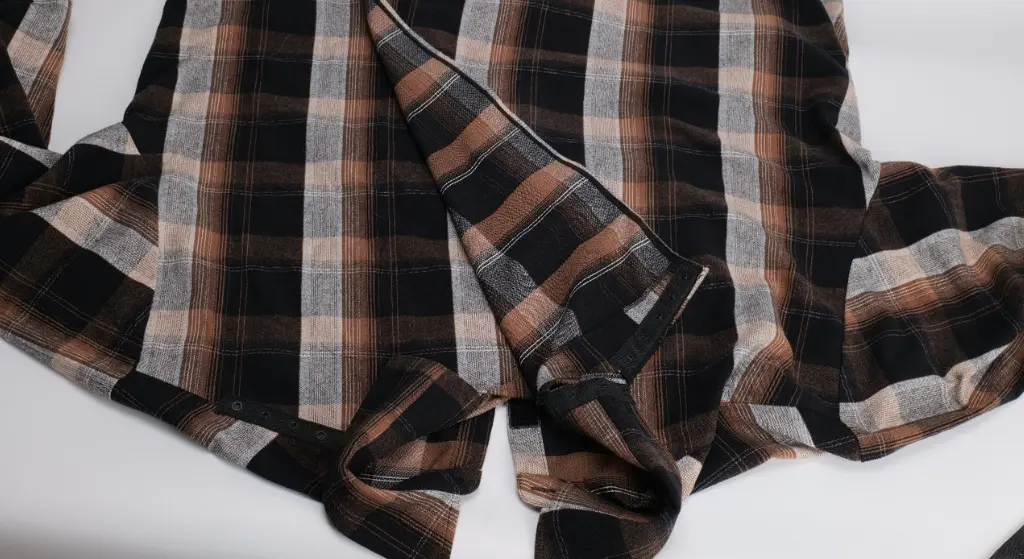
These are the areas where most purchase decisions take place, and which most often have inaccurate labels. These are the actual design elements that give adaptive clothing functionality.
The closure method is often the defining design element in adaptive clothing. Traditional buttoning and back zipper methods of closing garments are often inappropriate for a wide variety of users.
The major alternative closure options include:
The garment designed for the fit of a standing body is going to feel wrong to wear while sitting down. Trousers and skirts made to fit a woman in a wheelchair or seated position will have the following:
Female patients who use any form of medical devices, such as insulin pumps, G-tubes, PICC lines, ostomy bags, catheters, and port-a-caths, require clothes that make access easy without having to disrobe entirely. This issue can be solved using specially designed access features, pockets, and strategically placed zippers.
Adaptive Feature Quick-Reference
| Feature | What It Solves | Best For |
| Magnetic closures | Replaces buttons — dresses in seconds without fine motor control | Parkinson’s, arthritis, stroke recovery |
| Hook-and-loop (Velcro) | Adjustable, fast for caregivers, repositionable | Care facilities, assisted dressing, cognitive needs |
| Side-seam snaps | Lay-flat dressing without lifting or twisting | Limited range of motion, post-surgery, bed dressing |
| Higher back rise | Prevents waist gaping when seated | Wheelchair users, long-term seated wear |
| Open-back design | Full rear access for caregiver dressing | Assisted dressing, bedridden wear |
| Side zippers (waist to ankle) | Removes the need to step through or pull up trousers | Wheelchair users, limited lower body mobility |
| Medical device access openings | Discreet access to ports, tubes, monitors without undressing | Medical device users, dialysis, ostomy |
| Tagless / flat-seam construction | Eliminates skin irritation from tags and raised seams | Sensory sensitivities, skin fragility, neurological conditions |
| Elastic waistbands | No fasteners needed on bottoms — pull-on ease | General adaptive use, arthritis, limited dexterity |
Designing begins with the closure and ends with the choice of material. A well-designed garment will fail due to the wrong choice of material for everyday wear by the person with a disability.
Many women using adaptive clothes spend long hours wearing them, or have skin sensitive issues due to health, treatment, or their age. Scratchy material, tags, and seams are not an issue, but something that will affect the comfort level of the wearer and can result in a rash or irritation. High-quality clothes will provide a tagless and seam-free design with softness.
When putting on clothes using adaptive dressing techniques, many movements are inaccurate and need some flexibility from the material itself. Some amount of stretch in the material will help with it. Usually, this is achieved through the combination of some other materials like spandex or elastane. Poor recovery leads to a quick loss of the garment’s shape.
Temperature control is a matter of great importance for seated women. Wearing garments that trap heat or moisture leads to skin problems. Breathable and moisture-wicking fabrics make it possible to wear them comfortably for a longer period.
Clothes designed for people who have difficulties moving usually get used more frequently than regular clothes. They get washed more often and are put under more stress. This is why the material needs to be durable. Closing systems such as Velcro and magnets should be able to withstand at least 50-100+ washes.
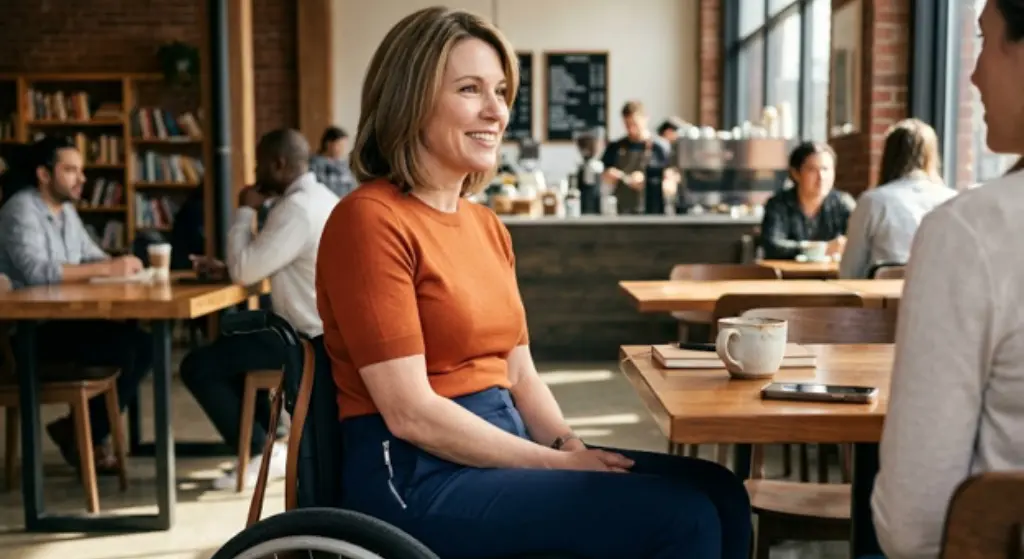
One of the most persistent criticisms of adaptive clothing was style: clothes that addressed the functional issue but were still either clinical, institutional, or just plain uncool. A woman who cares about her appearance—and almost all women do—shouldn’t be forced to make that choice.
The gap is closing. The adaptive clothing industry has come into its own over the past ten years, and there are several reasons for this quality improvement:
This is not just an ethical issue but also an economic one. The disability community, together with their families, has massive buying power — studies always estimate that the number in dollars runs into the trillions yearly when family and social networks are taken into account.
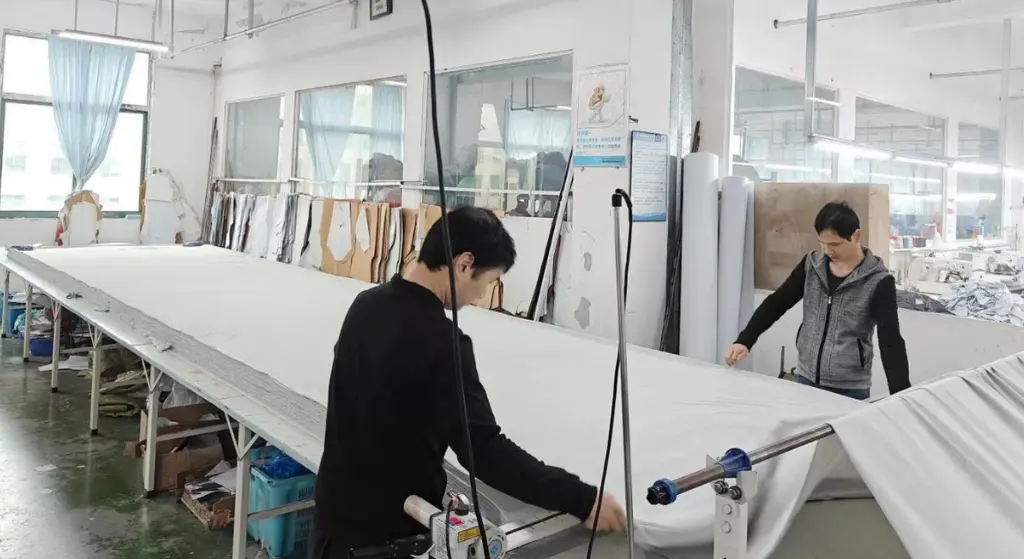
Regardless of whether you are buying a product for a single consumer or for an institution or retail program, the process is basically the same. Claims of functionality must always be tested.
Closure Evaluation
A closure that may seem easy to use in a static situation will not necessarily perform the same way in a dynamic situation. Try the closure one-handed, with diminished grip strength, and in the position in which the wearer will be using it. A magnetic closure should close easily and without having to line it up precisely. A Velcro closure should fasten firmly but not pull fabric or skin away from the body.
If your purchaser is seated or will spend a lot of time sitting, put the garment on and sit down. Back gaping, lap bagging, waist pulling, or seam placement causing pressure should be noted.
If your device is unique enough that you need to test access on it, do so prior to ordering in bulk or starting any type of program. This includes the size of the pocket, the reach of the zipper, the location of the openings, and being able to reclose the garment.
Request information about the performance of closures over multiple washes. A good adaptive clothing manufacturer should have their closures tested to withstand at least some significant number of washes. If the clothing will be laundered commercially, then the standards are higher compared to when laundering takes place in the home.
Adaptive Women’s Clothing Buyer Checklist
| What to Verify | Why It Matters |
| Closure type and operation | Confirms the wearer or caregiver can use it reliably in real conditions |
| Seated fit — back rise, lap, waist | Standard sizing does not account for seated body proportions |
| Seam placement and surface texture | Raised seams and tags cause skin irritation with extended wear |
| Medical device access if required | Pocket size, zipper reach, and re-closure must work with the specific device |
| Fabric composition and weight | Affects breathability, skin comfort, and durability across wash cycles |
| Closure wash-cycle rating | Especially critical for care settings using commercial laundry |
| Sizing range available | Adaptive users include larger sizes and non-standard proportions |
| Aesthetic — does it look like adaptive? | Wearers have a right to look like themselves, not a medical category |
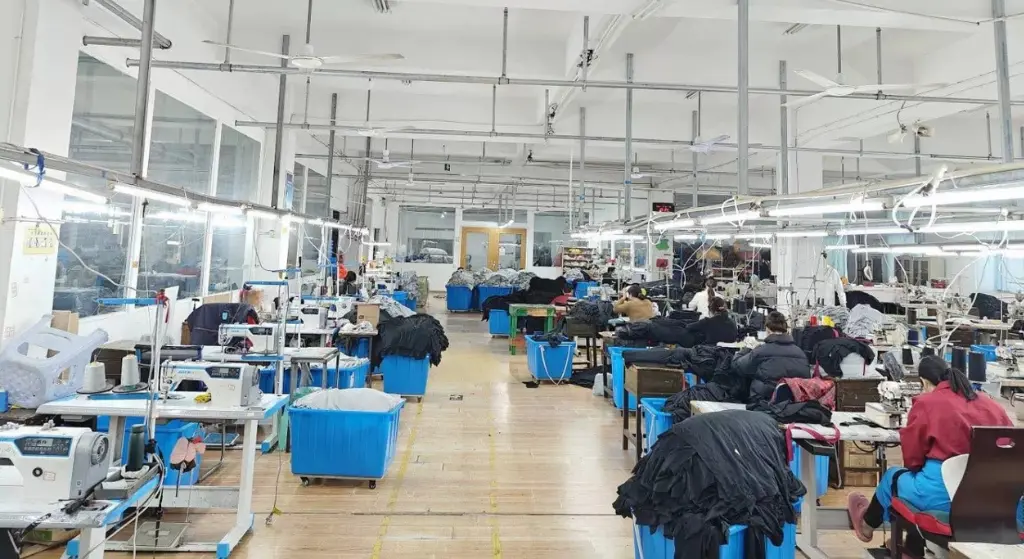
If you are buying for your nursing facility, adaptive retail store, or private label, sampling is only the beginning. There are other factors to consider when sourcing adaptive clothing in larger quantities.
Inconsistency in production runs is one of the biggest problems faced when sourcing adaptive apparel. A garment that works perfectly in the initial sample batch may be inconsistent in other areas, such as the hand of the fabric, fit of the closures, straightness of the seams, and overall sizing in later runs. Quality control during production is integral to the sourcing process.
AdaptiveGarment.com acts as an OEM manufacturer providing adaptive clothing to B2B customers around the world, such as care brands, rehabilitation-oriented retailers, and private labels. The manufacturing process involves three quality control stages before shipment, starting from sample approval and before shipment inspection, with MOQ being as low as 100 pieces per style. Total customization of the products by fabric, closures, sizes, labeling, and packaging is provided.
For B2B customers who plan to start an adaptive women’s line from scratch, the OEM manufacturing allows establishing a private label brand on the adaptive market without creating unique technical patterns; the existing adaptive designs of the manufacturer will serve as the basis for the products. Also, manufacturing according to the existing designs and tech packs is possible.
Traditional clothing is based on the assumption that the individual has normal mobility, gripping power, and range of movement. Adaptive clothing is developed specifically to overcome particular dressing obstacles, which may be accomplished via modifications in closure, garment design, fabric choice, or accessibility of devices embedded into the garment itself. Sometimes, the functional difference between two clothes can be quite large despite their similar appearance.
Absolutely yes, and that became possible recently. High-quality adaptive clothing must be indistinguishable from conventional apparel items. Magnetic closures resemble button plackets, the open back can be concealed from the front side, and seated fit pants can seem perfectly cut professional pants. Adaptivity of the garment lies in its design rather than in the way it looks.
Magnetic closures are safe for all, except for people who have pacemakers, ICD or any kind of electronic implant in their bodies, since magnets may affect these devices. All other users will not face any problems.
Original Equipment Manufacturer refers to when you provide design specifications and then a manufacturer makes products according to your designs and requirements, thus, you remain the owner of design rights. In the case of a private label, you take a ready-made design of the garment from the manufacturer and put your brand name on it. If we speak about adaptive clothing lines, then the OEM approach gives you more freedom in functional specifications and compliance issues.
First, consider the particular functional specifications for the product – what closures, what medical device access, what wash cycle requirements apply. Then, look at manufacturers who are known for making adaptive clothing (and not just any clothing manufacturers), ask for samples of the major SKUs you would need, and check whether the product specification holds in the sample production as well as the initial bulk run. OEM manufacturers that have QC process documentation and experience producing adaptive designs are generally quicker and less risky than general manufacturers who offer adaptive products as a sideline.
For adaptive clothing that comes into contact with delicate skin (which is most of the category), OEKO-TEX Standard 100 certification serves as the industry standard for certifying that fabric has been tested for harmful substances. Manufacturers who issue test certificates for their fabric against ISO textile testing standards are setting out a quality benchmark rather than giving a guarantee of quality.
