

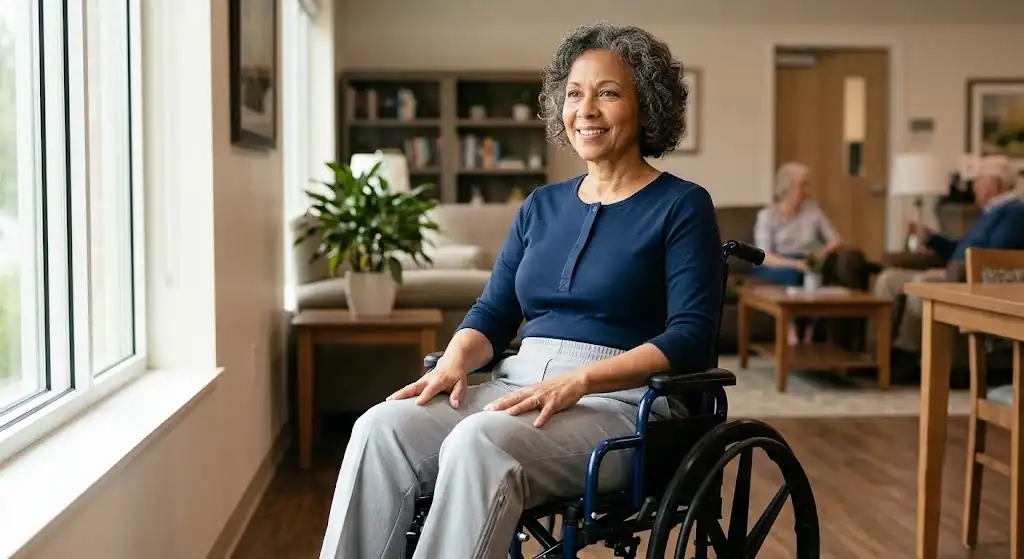
A nursing home made an order for 60 pairs of adaptive clothing for wheelchair users from a generic overseas company offering products specifically designed for the disabled. The pants came with a normal rise and a back seam which cut into the back rest of the wheel chair. In addition, there was only one back button which the patients could not reach without help. After a month, 50 percent of the order had remained untouched.
It happens annually in nursing homes, rehabilitation centers, and disability retailers, and it all stems from one misconception — confusing the term “adaptive” for something other than a construction concept. Wheelchair adaptive clothing isn’t just loose-fitting clothing — it’s clothing built around a seated posture and created specifically for the manner in which a wheelchair user would dress.
In this article, I will describe what is really meant by wheelchair-friendly clothes – what materials and construction methods are used that are durable enough for everyday use while sitting, how to compare various types of closures and sizes, and what should be asked from a supplier before placing a bulk order. Regardless of whether you buy for one client or launch your own clothing line, your decisions will be identical.
The term “adaptive clothing” is somewhat ambiguous and can make purchasing difficult. An adaptive piece of clothing designed specifically for wheelchair users is based on three main criteria – body position, dressing process and the frequency of access by a caregiver.
It is helpful to outline the functionality of the clothing you are looking for prior to contacting a manufacturer or supplier:
These questions will establish the rise height, style of closure, fabric weight, and seam line, and they are precisely the same set of questions a true adaptive apparel manufacturer must pose before quoting. Any supplier who fails to ask these questions is peddling a rebranded standard garment.
These are the main clothing types used when purchasing adaptive clothing for individuals and in wholesale orders for wheelchair users.
They are designed with a lower front rise and an elevated back rise to prevent chafing or gaping when seated. They are made with flat-fell or reinforced seams in the inseams to prevent bunching of fabric around hips and thighs, with stretch panels incorporated in the knees to allow for leg flexion.
Clothing items that zip up entirely from behind instead of pulling up over the head. This eliminates the effort involved in lifting over the head and makes it easy for the person assisting to get the individual dressed without moving the person out of the wheelchair.
Clothing type that includes a zipper from one or both sides of the leg that may even go all the way up to the waist. This design allows the clothes to be worn without having to stand. It is frequently requested for people who transfer and not those who walk.
Outer garments that can cover the shoulders and the wheelchair without needing to put arms into sleeves. This type of garment is common in care institutions for outdoor transportation and in cold climates when it is difficult to wear a regular coat while seated.
Apparel that features a concealed zipper or snap closure for ostomy or catheter, feeding tube or PICC line access without having to uncover the patient’s body or completely undress the garment.
Base layers that feature no tags and seamless construction around pressure points for patients sitting in one place for prolonged periods of time.
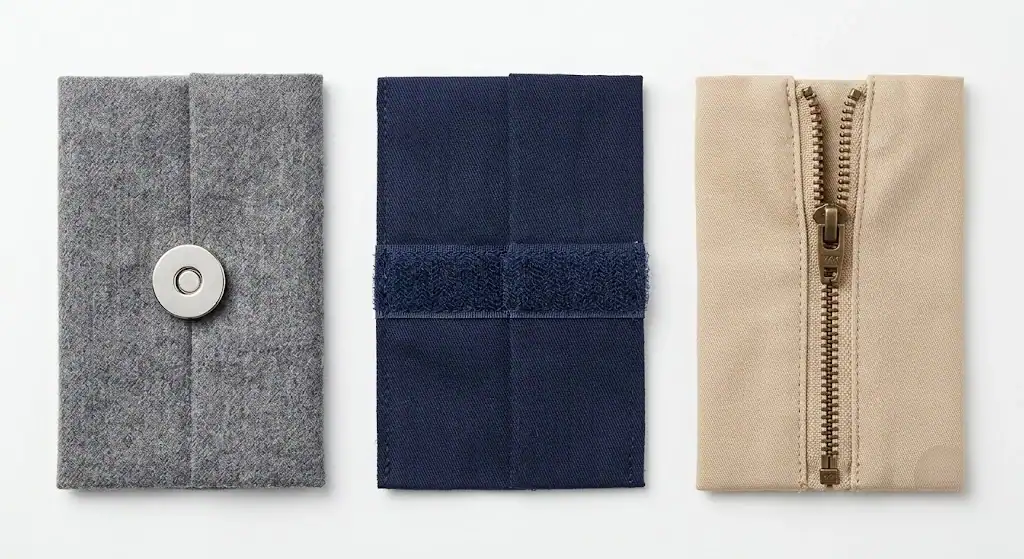
Closure is by far the most important factor determining how easy or difficult a garment is to put on, and it is the feature customers look at the most when deciding what to order.
| Closure Type | Best For | Caregiver Access | Durability |
| Magnetic closures | Independent dressing, limited dexterity, arthritis | Fast — no fine motor control needed | Good — 80+ washes typical |
| Hook-and-loop (Velcro-type) | Caregiver-assisted dressing, fast changes | Fastest option for assisted dressing | Moderate — loop wear over time |
| Side or back zippers | Seated dressing without standing or overhead reach | Moderate — requires some hand strength | Excellent with reinforced zipper tape |
| Snap closures | Medical access points, ostomy/catheter openings | Fast and discreet | Excellent — snaps rarely fail |
| Standard buttons (not recommended) | Avoid for primary closures on adaptive lines | Slow — requires fine motor control | Good, but defeats the adaptive purpose |
The majority of adaptive clothing ranges employ a combination of magnets or hook-and-loop closures on the main opening, with another snap or zipper opening available as a means of accessing the garment medically. A brand that provides a single closure on all its garments in a range probably has not designed the line specifically for wearing while sitting down.
.
The pattern for a standing body is different from that of a seated body because the entire proportion changes once the body is sitting throughout the day.
These design elements cannot be seen in a photograph, which is why a sample is so important when choosing adaptive clothing, more than any other type of garment. A vendor needs to be able to describe these design elements, rather than only stating that the garment is “wheelchair friendly.”
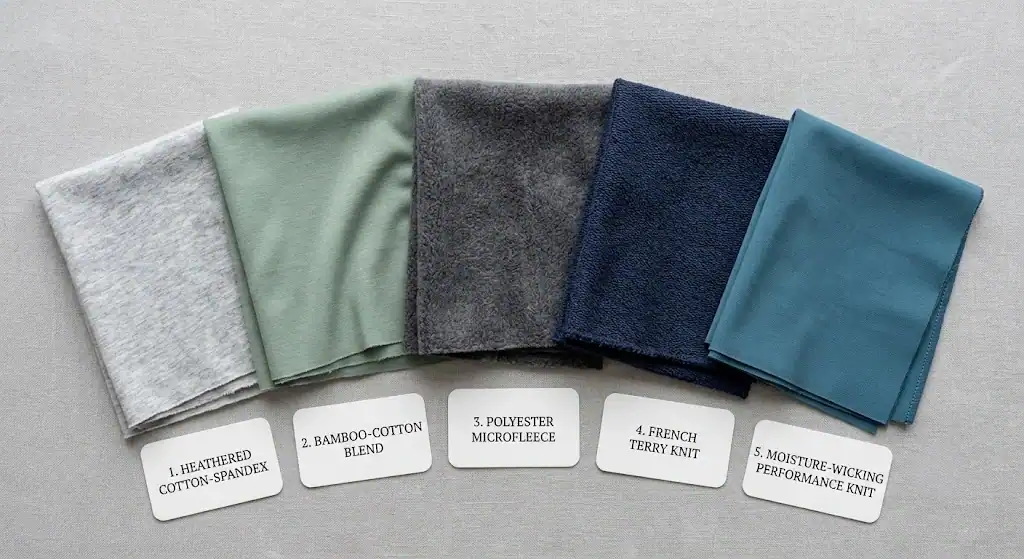
The pressure of sitting wears down the fabric differently from when standing; contact pressure, regular industrial laundering in care facilities, and skin contact cause poor quality fabrics to deteriorate much quicker than is advertised by the supplier.
| Fabric Type | GSM Range | Best Application | Key Property |
| Cotton-Spandex Blend | 180–220 gsm | Everyday seated wear, tops and pants | Stretch recovery + breathability |
| Bamboo-Cotton Blend | 160–200 gsm | Sensitive skin, extended contact wear | Soft hand-feel + antimicrobial |
| Polyester Microfleece | 200–280 gsm | Care facility basics, frequent washing | Durable under commercial laundering |
| French Terry Knit | 240–320 gsm | Casual adaptive tops, loungewear | Stretch + structure without stiffness |
| Moisture-Wicking Performance Knit | 150–200 gsm | Active wheelchair users, daily-wear lines | Quick-dry + odor resistance |
| Recycled Polyester Blend | 180–260 gsm | Sustainability-focused retail brands | Lower carbon, OEKO-TEX certifiable |
In order to meet the demands of organizations which order clothes for hospitals, rehabilitation clinics, or any government institutions, the fabric should be able to withstand high-temperature industrial washing while retaining its stretch properties. In addition, the demand for fabrics that have been OEKO-TEX certified is rising because of the safety requirement of skin contact.
Adaptive clothing in bulk has more considerations involved than regular clothing apparel – different sizes and fit, different closures depending on the residents or clients, and increased durability needs. It is best to know how to properly do this to prevent having to re-order later.
Decide on the type of clothes, closure, whether the clothes will be independent or assisted dressing, and material of the garment. All other aspects will depend on getting this part straight.
This must be done when ordering for facilities or brands. Collect some basic information about each wearer – size, preferred closures, and access needs. Without doing this, facilities tend to over-order one size and under-order the other sizes.
The sample tells you things that even photographs cannot, such as how it feels to sit for any period of time in the garment, does the closure work one-handedly, and how the back rise works with wheelchair use. Have written approval on the sample prior to mass production.
Sizing for adaptive clothing tends not to conform with sizing for retail sales since it is based on measurements while seated. You need the manufacturer’s complete size specification chart, along with ensuring the labelling will be done either by name, room or department.
Find out about the production lead time, whether the order will ship in one shipment or multiple shipments, and whether there are customs and duty concerns for international shipping. For facilities ordering under a contract arrangement, ensure the manufacturer can produce follow up batches in the same fabric and construction.
Ready to Start? Work with an experienced adaptive clothing OEM manufacturing company and get a quote with no minimum order pressure.
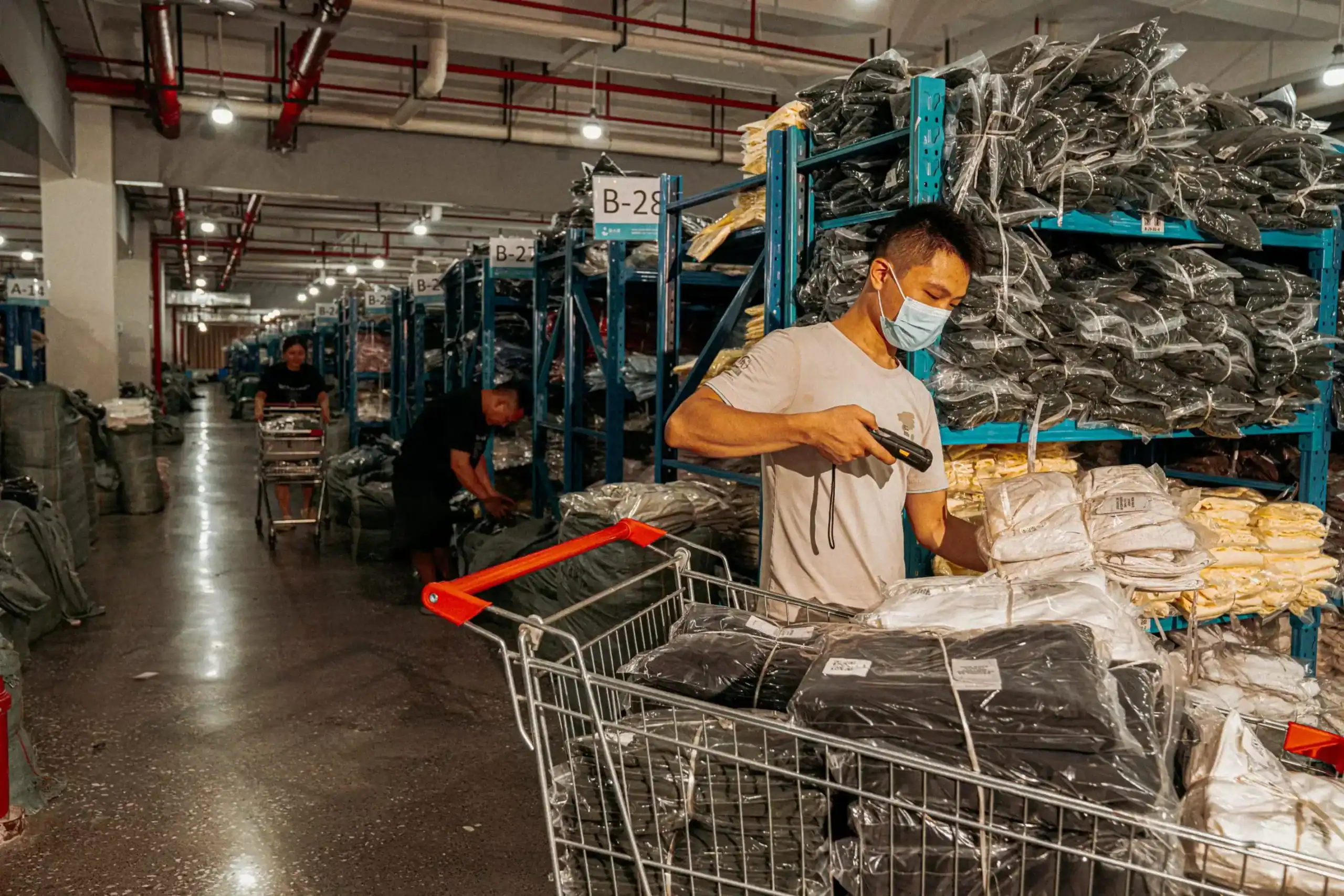
Adaptive clothing sourcing can be approached in radically different ways depending on the situation, and it all starts with finding out what stage your organization is at.
Most care facilities and rehabilitation brands start their journey through the Wholesale Route and progress into OEM as soon as there are enough orders for a custom specification. A combination of wholesale program and OEM manufacturing offered by a single factory allows for a more flexible approach to entering the market.
Some products may use the term “adaptive” to refer to a loose version of the standard garment without any change in the design to fit the seated body. Always check to see if modifications were made to the rise, the seams, and the pocket location for the seated position.
An institution that buys adaptive clothes for people with varied abilities should offer multiple closure types rather than opt for only one kind of closure for the entire order. This is because it might leave out those individuals who are unable to manage the garment themselves.
It is more critical to do this step right in adaptive clothing than most others, since issues regarding fit are not superficial; a misplaced seam or waist can cause pressure sores from long-term use. Never approve volume manufacturing based only on photos.
Institutions launder clothes much more frequently, often using hotter water than a consumer would in their household washing machine. Even though a fabric may behave admirably in a home laundry setting, it could deteriorate rapidly in an institutional laundry environment. Make sure the manufacturer knows how the item will be laundered.
The manufacturer itself is the key to fit accuracy, fabrics, and, of course, the assurance that a new batch of clothing six months from now will match the initial production down to the last detail. A manufacturer that specializes in producing regular clothing with additional adaptive features is not equal to the company that bases its product on the seated-fit construction from the very first steps of creation.
The questions that always set apart qualified manufacturers of adaptive clothing from simple suppliers:
An adaptive manufacturing process that responds to these questions in detailed documentation is indeed an adaptive manufacturing process. If there is only some general and undocumented comfort in their answer, then most likely they adopted the term “adaptive” as an afterthought.
AdaptiveGarment offers adaptive apparel for wheelchair-bound individuals, adaptive clothing for seniors, and care facilities by way of OEM private label manufacturing, wholesale delivery from low minimums, and in-house quality control from sample approval to pre-shipment examination. We serve care facilities, rehabilitation companies, and B2B wholesalers in the USA, Europe, and Australia.
What is the difference between adaptive clothing and regular clothing?
Adaptive clothing designs are based on the shape of a sitting or partially disabled body from the design phase – higher back rise, moved seams and pockets, as well as magnetic, hook and loop, or side closures that do not require fine motor skills or upright posture to operate. Regular clothes are designed with an erect body shape in mind and only approximate comfort when modified.
Which closures suit those in wheelchairs with weak hands best?
For people in wheelchairs with weak hand functions, magnetic and hook-and-loop closures are the most suitable options, as none of them require fine motor skills. Side or back zippers will work well for people in wheelchairs with moderate hand functions but no ability to stand.
Can medical device access points be placed in adaptive clothes?
Yes, many companies can provide such customization. There are zippered and snapped access points for catheter, ostomy, feeding tube, or PICC line access. Specify the type of the device and the exact location needed, as this option is often made custom.
What is the minimum order quantity for adaptive clothes manufacturing?
The MOQ differs depending on the sourcing route. While wholesale orders for existing styles typically begin at around 20-50 items per style, OEM private label manufacturing usually starts with a larger MOQ. There are some manufacturers that allow low MOQ, such as AdaptiveGarment.com, for smaller care facilities and growing brands.
Is there a difference between adaptive clothing sizing and regular sizing?
The sizing system of adaptive clothing is based on measurements of sitting body parts and not standing positions, which means that the same-sized item may differ in fit from a regular retail product. Always ask for the size specification sheet with a seated-fit size chart.
Does adaptive clothing need to be certified for safety or fabric standards?
There is no particular certification requirement for adaptive clothing, but procurement departments within healthcare and governmental organizations are increasingly requesting OEKO-TEX certification of the fabric for testing harmful chemicals and ensuring its safety for long-term use against the skin.
Looking for Sources of Adaptive Clothing for People Using Wheelchairs?
Getting the right adaptive clothing line depends on two main factors: getting the manufacturer who really knows how to make garments specifically for seating fit, and specifying before manufacturing. Otherwise, facilities and brands will just be left with surplus products and disappointed wearers.
AdaptiveGarment.com produces adaptive clothing for people using wheelchairs, older adults, and care facilities — private label production services, wholesale distribution with minimal MOQ, full in-house quality control, sample to pre-shipment inspection, available to all B2B clients in the USA, EU, and Australia.
Make a production inquiry — get in touch with AdaptiveGarment.com

One thought on “Adaptive Clothing for Wheelchair Users | AdaptiveGarment”