


Working with a china clothing factory will help you save a lot on your production costs and get access to manufacturing resources that would otherwise be quite challenging to find. It could also be a total disaster. Foreign buyers lose thousands of dollars to trading companies that pretend to be manufacturers, vanish right after accepting a deposit, or deliver an order which is totally different from the one that was confirmed with a sample. It doesn’t have to be this way. This never happens to a buyer who does due diligence.
In this article, we will learn the precise steps of how to do the due diligence for a china clothing factory: confirming that the business actually exists, making sure that it’s a real manufacturer, checking its certifications, sample process, and protecting your shipment with a third party inspection. In case your apparel will be adaptive, medical, or functional in nature, we’ll discuss why specialization becomes even more important.
Since China is one of the major sources of clothing manufacturing facilities in the world, the number of companies, trading firms, and middlemen posing as factories in the country is huge. A reliable factory and an unscrupulous company will have the same appearance on the sourcing site – both will have product catalogs, both will provide quick responses, and both will provide low prices. However, the discrepancy between the two becomes evident only during the process of digging through the sales talk – precisely the thing that many foreign buyers cannot afford to do on their own.
There are numerous risks associated with the absence of this procedure, ranging from the loss of a down payment, shipping low-quality counterfeit products, to being charged by a dishonest broker. All of these checkpoints are listed in the checklist below since each of them solves one of the problems listed above.
Firstly, make sure the company you are negotiating with is indeed an existing legal entity registered in China. The business license is issued to each legally operating Chinese company by the Administration for Market Regulation either at the local or national level. All the companies registered in China have their information included in the National Enterprise Credit Information Publicity System, which is an official database maintained by the government. You should ask for a picture of the license and check the name and unified social credit code of the company in the database yourself rather than relying on screenshots.
This is by far the most common misconception among overseas buyers. Trading companies are legal businesses, but they do not produce goods themselves and merely purchase the needed quantity at the factory for your benefit and profit. This is not an issue per se, but you have to understand what type of business your partner represents because, in the case of a trading company, there are no guarantees related to the specifics of the factory, such as equipment used, quality control staff working at their disposal, or production slots. Some trading companies even position themselves as manufacturers for private labels while, in reality, selling the manufacturing capacity of a factory with whom you will not even communicate. Ask your partner whether they own the factory, demand a video tour around the factory floor, and ask questions that only the factory employees can answer – how many machines do they have now, for example.
Certifications are the fastest, most objective signal a factory has invested in a real, auditable quality system rather than promising quality verbally. Ask for a documented certification covering quality management and, if your product involves fabric safety claims, textile safety testing as well. For ethical sourcing assurance, a factory that has completed an independently verified amfori BSCI social compliance audit has been assessed on labor conditions by a third party, not just by its own management, which matters increasingly to retailers and end buyers who care about supply chain ethics.
Do not purchase bulk items without sample approval from the factory, and be suspicious if they try to rush or avoid the sampling process. The good factory policy should contain information about sample approval timeline, amount of revisions and guarantee of sample approval being production reference. Beware of factories which provide you with a beautiful sample made of premium fabrics but, after the confirmation of bulk order, will switch to cheaper materials and trims – one of the most popular tricks in the industry. Inquire how they keep and refer to your sample during bulk production.
Communication with the factory before ordering gives the best possible impression of their communication style after placing an order and making payment. Vagueness when answering concrete technical questions, slow response, unwillingness to put things in writing – are red flags. The factory that is not afraid of being caught later will provide you with concrete information about fabric composition, equipment used, and lead time.
No matter how well your factory has done on all other checks, do not miss having the actual items inspected by third parties before they ship out from China. With a pre-shipment inspection service from SGS, an inspector will come to the factory, check a statistically significant number of samples of the actual order against your approved samples and specifications, and issue the report before you give the final approval for payment or shipping. This simple step will detect most of the quality issues missed in sampling, and will have a neutral party standing between you and the factory at a crucial moment.
The inspection report will normally evaluate findings against standard quality thresholds, point out any discrepancies between the approved samples in materials, stitching, measurements, etc., and provide photos you can refer to when discussing issues with the factory. Incorporating this step in your production cycle in advance, rather than having it as an additional one to be added later, will allow the factory to solve the problem before shipping, rather than after it reaches you.
MOQ and pricing information need to be confirmed in writing prior to committing to anything; never negotiate MOQs and pricing after you’ve paid a deposit. Open and straightforward MOQ and pricing structures will be itemized according to the costs of fabric, trims, labor, and finishing, allowing for a clear view of your costs and understanding of how they vary based on changes in quantity or specifications. Watch out for factories that offer only one all-in-one quote, and don’t send your deposit until the payment terms are clear.
An acceptable payment structure spreads the risk throughout the production process instead of carrying all the risk at the beginning: a small initial deposit for sampling and material ordering, then a second payment once production begins, and finally a final payment after the final goods pass third-party inspection. If a factory demands total payment before production begins, use that as a negotiation point.
A general clothing factory in China can be an ideal business partner for apparel items in common categories, manufactured effectively at scale using well-established supply chains for standard fabrics and trims. This, however, does not imply that a generalist apparel manufacturer can provide you with a technical or functional garment.
A specialized adaptive or medical apparel manufacturing facility knows about seated fit pattern making, magnetic and Velcro closure construction, back openings for the care staff, skin-friendly and tagless finishes, something a generalist factory is unlikely to possess experience in. In addition, specialized adaptive garment manufacturing facilities know what kind of compliance to expect from nursing homes, rehabilitation companies, and distributors- customers that will never buy an item that may have failed functionally regardless of stitching quality.
If you are sourcing for seniors, wheelchair users, rehabilitation patients, or care facilities, this distinction is worth the extra vetting time. A general apparel OEM manufacturer can produce a well-made standard garment, but functional adaptive construction requires a factory that has actually built that category before, not one learning on your order.
At Adaptive Garment, every order for care, rehab, and medical brands moves through how we work, a structured process built specifically around functional garment production, covering tech pack review, fabric and trim sourcing, pattern-making, sample development, and bulk production under documented quality control, rather than a general apparel workflow adapted after the fact.
Material decisions follow the same discipline: brands can review fabric and material choice options selected for comfort, durability, and skin safety before committing to bulk production, avoiding the fabric substitution risk described above. For brands that need more than a standard product, customization options extend to closures, sizing, colorways, and functional features built around a specific resident population or user group, backed by a documented certification program and a transparent sample policy from the first inquiry through reorder.
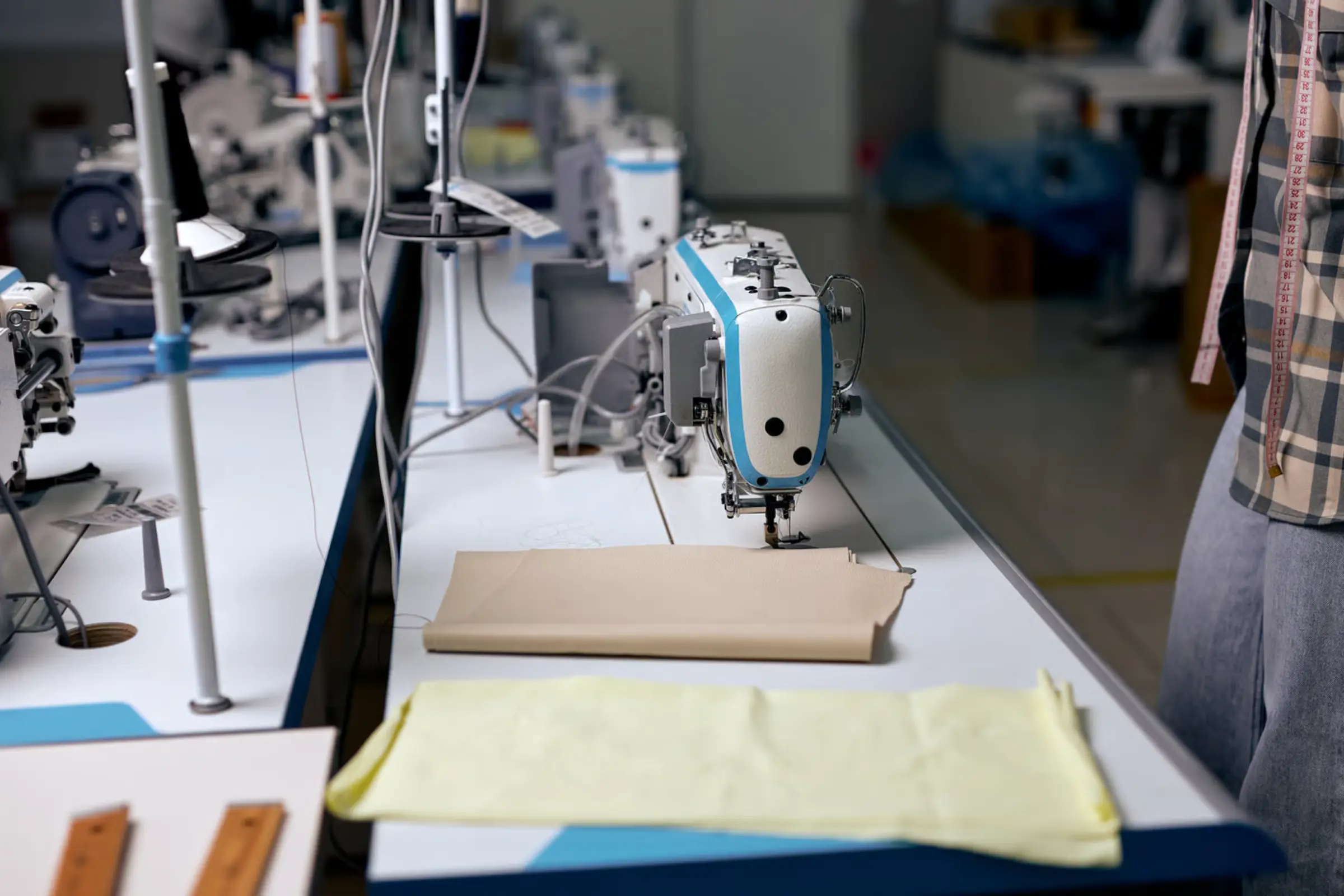
| Checkpoint | Why It Matters |
| Business license verified against government registry | Confirms the company is a real, currently active legal entity |
| Live video walkthrough of the actual production floor completed | Confirms you are dealing with a factory, not just a reseller |
| Certifications reviewed (quality, compliance, ethical sourcing) | Reduces risk of quality failures and supply chain issues |
| Sample approved and retained as the production reference | Prevents fabric or trim substitution during bulk production |
| Communication clear, specific, and responsive at inquiry stage | Preview of how the factory will behave mid-production |
| Third-party pre-shipment inspection scheduled before payment | Independently verifies goods match specification before shipping |
| MOQ and full pricing breakdown confirmed in writing | Prevents hidden costs discovered only after ordering |
| Payment terms structured across production milestones | Reduces exposure if the factory fails to deliver as agreed |
National Enterprise Credit Information Publicity System — China’s official government registry for verifying a factory’s business license and legal registration status
SGS pre-shipment inspection — independent third-party inspection services used to verify goods against specification before shipment
amfori BSCI social compliance audit — an independent audit standard for verifying ethical labor practices in a factory’s supply chain
The verification process involves verifying the factory’s legal registration, ownership of the production facilities, certification, and capability to maintain quality standards without just going by their statements alone.
You will be required to have a copy of their business license, which is cross-checked independently using their name and unified social credit code in China’s National Enterprise Credit Information Publicity System, which is the country’s official business registry.
Make sure you have a live video conference of the production floor, ask some questions that only a person present at the production floor can answer, and find out whether they own the factory or they represent a clothing manufacturer in China.
It is important to have a documented quality management certification from the manufacturer. If labor practices are important to your buyers, you may require a certified social compliance audit such as amfori BSCI.
It is highly discouraged; failure to go through the sample stage is one of the most common mistakes that leads to ordering bulk clothes that don’t meet buyers’ expectations due to fabric and/or trim substitution that happens after sampling when there is no reference sample available.
Third-party pre-shipment inspection is an independent physical inspection of your goods before shipment according to your approved sample and specs and is highly recommended for all the first orders and all other orders which are above a certain dollar value.
These include failure to provide a verifiable business license, unwillingness to show the production floor on video, failure to allow the sampling stage, and payment terms without milestones.
No, because adaptive and medical garments involve special construction such as magnetic closures, back openings, and seated fit that most general apparel factories in China haven’t produced before.
